

Gardens & Parks
Kaiserslautern Garden Show
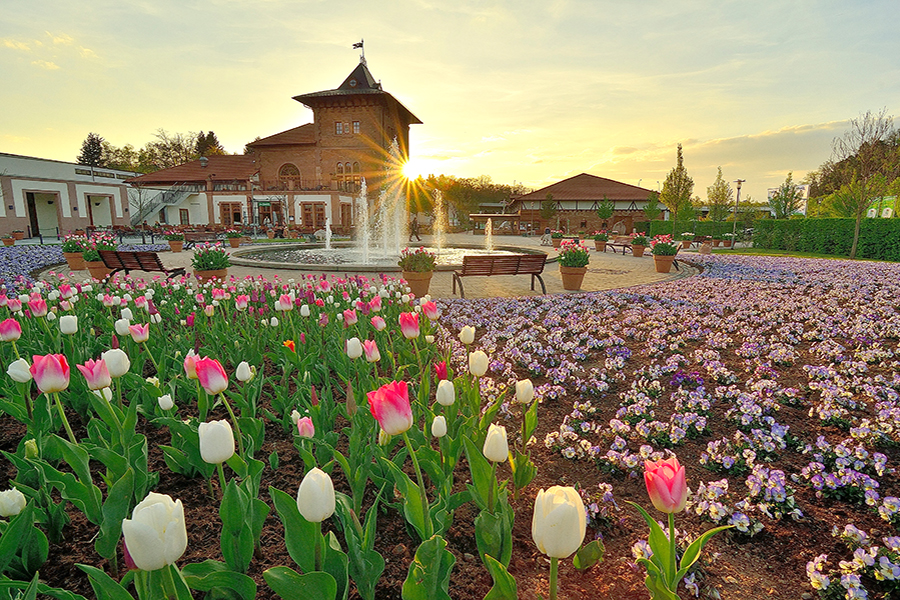
On the disused grounds of the Kaiserslautern worsted spinning mill and the municipal slaughterhouse, the first Rhineland-Palatinate State Garden Show opened its gates in 2000. Since then, the approximately 20-hectare park has hosted a variety of changing exhibitions and events. The park’s dinosaur park is also a highlight, where visitors of all ages can learn fascinating facts about prehistoric animals throughout the grounds. The brewery at the entrance to the garden show offers delicious food and drinks, perfect for relaxing and enjoying refreshments. Two kiosks on the grounds provide ample options for smaller snacks.

Read more about the garden show in Kaiserslautern
Japanese Garden
Opened in 2000, this park is the largest enclosed Japanese garden in Europe and it is located in the city of Kaiserslautern.
Gardens & parks – 1 –
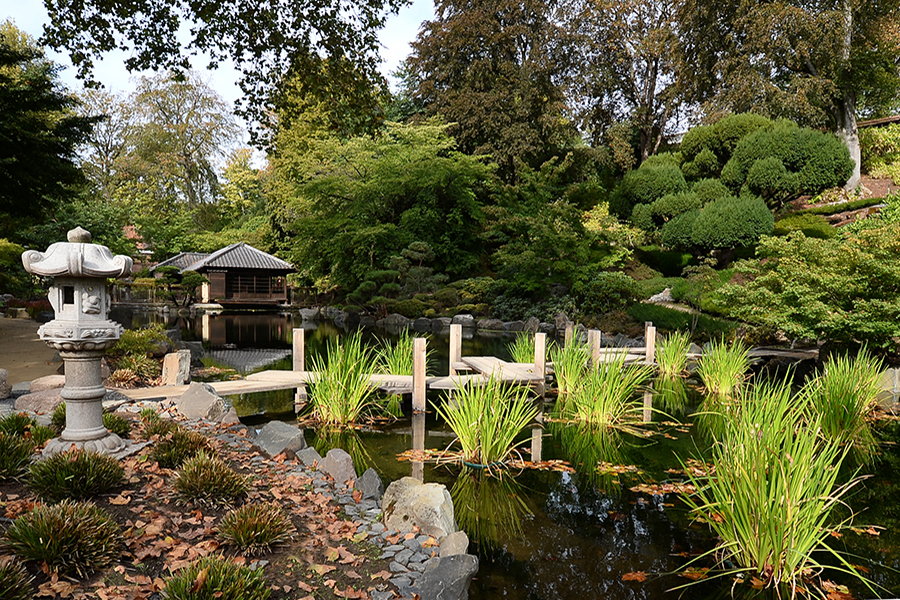
Covering an area of 13,500 square meters, the Japanese garden boasts a diverse array of plant species, two ponds with a striking ten-meter-high waterfall, and, as a further highlight, a traditional Japanese tea and guest house over 100 years old. The experience is further enhanced by the Japanese kiosk located directly in the garden and the Japanese restaurant in the adjacent Hotel Alcatraz.
Read more about the Japanese Garden in Kaiserslautern
Rose Garden Zweibrücken
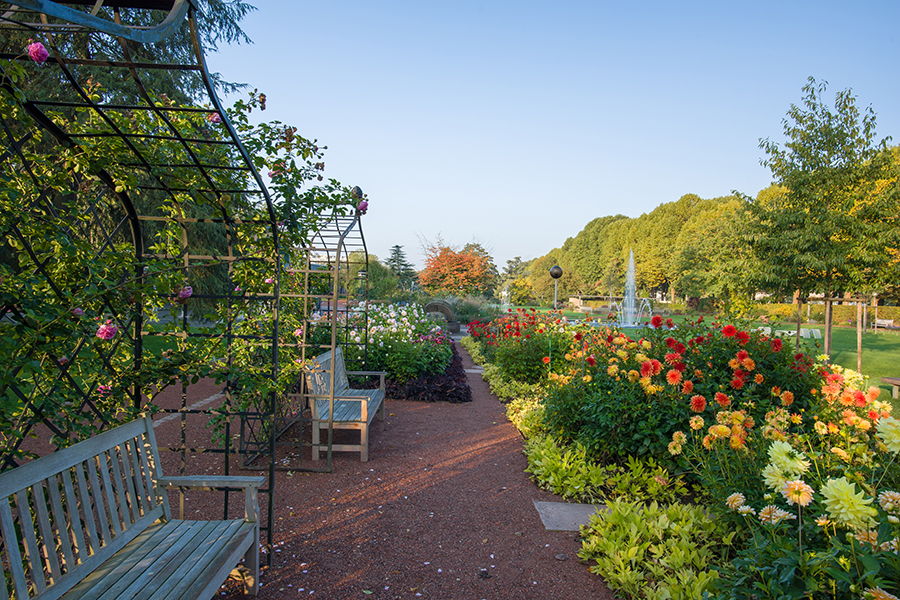
The rose garden, first opened in 1914, covers an area of approximately 4.5 hectares and features hundreds of different varieties of roses, perennials, and shrubs. In addition, the ornamental flowerbeds
Gardens & parks – 2 –
are planted with a changing display of spring and summer flowers each year. The rose garden is the landmark of Zweibrücken, the „City of Roses.“
Read more about the rose garden in Zweibrücken
Strecktalpark in Pirmasens
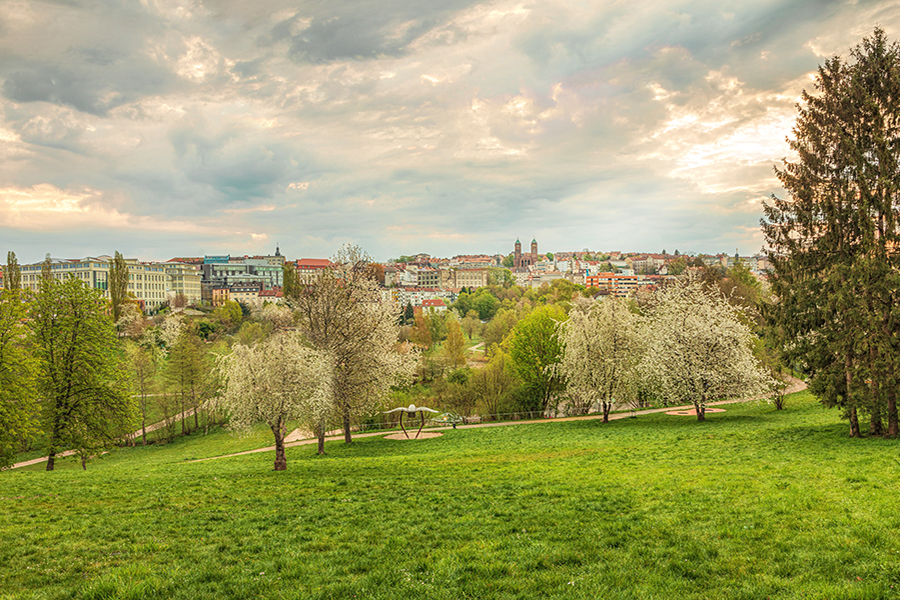
The Strecktalpark in Pirmasens is a park built on a former industrial site. The approximately 15-hectare parkland offers a diverse program of hands-on activities, including outdoor exhibits from the Dynamikum Science Center and a variety of sports facilities. The former „Rheinberger“ shoe factory in the background provides excellent photo opportunities in this urban landscape park. Throughout the summer, Strecktalpark hosts numerous events, including live music. A refreshing drink or a light snack awaits you in the park’s beer garden.
Read more about the Strecktalpark

Address: Fröhnstraße 18, 66954 Pirmasens
Gardens & parks – 3 –
Baroque terraced garden Kirchheimbolanden
The construction of the Baroque terraced garden was commissioned by Prince Karl August of Nassau-Weilburg (1685-1753). The terraced garden has been altered several times over the last two centuries, so that today only a few elements of the original garden are visible. The town of Kirchheimbolanden, supported by its citizens, has therefore undertaken the reactivation of the Baroque terraced garden, which was located between the castle and the ballroom around 250 years ago.
Read more about the Baroque terraced garden
Wild Rose Garden Zweibrücken
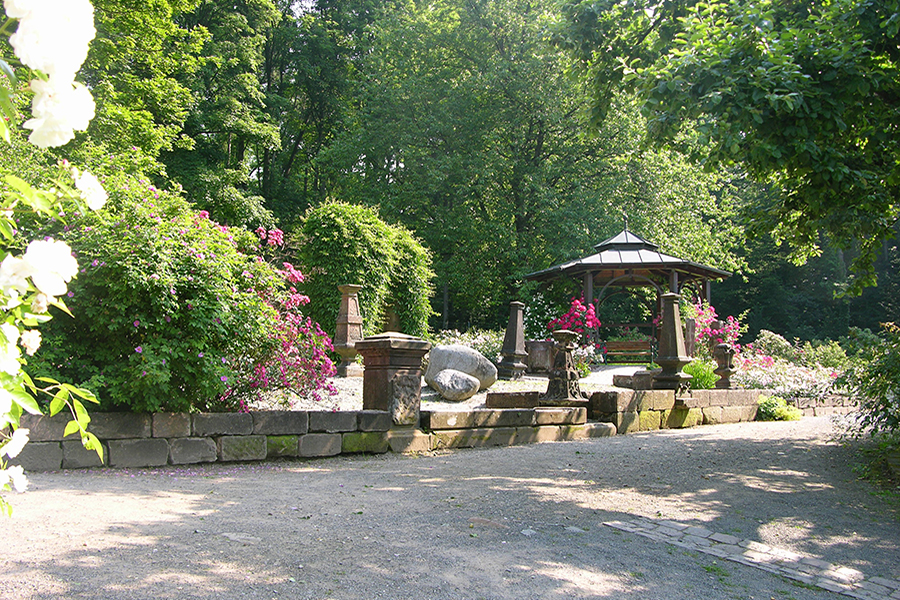
The wild rose garden, created between 1974 and 1976, is based on the idea of Zweibrücken’s horticultural director, Oskar Scheerer (1906-1971). Today, it boasts approximately 550 different rose varieties and shrubs. The wild rose garden is part of the roughly 30-hectare historic „Fasanerie“ garden complex and was planted as a complement to the rose garden in
Gardens & parks – 4 –
Zweibrücken. Those wishing to round off their visit to the wild rose garden with a delicious meal can do so at the Fasanerie country estate, where two restaurants await.
Read more about the wild rose garden in Zweibrücken
Address: Fasaneriestraße, 66482 Zweibrücken
Volkspark in Kaiserslautern
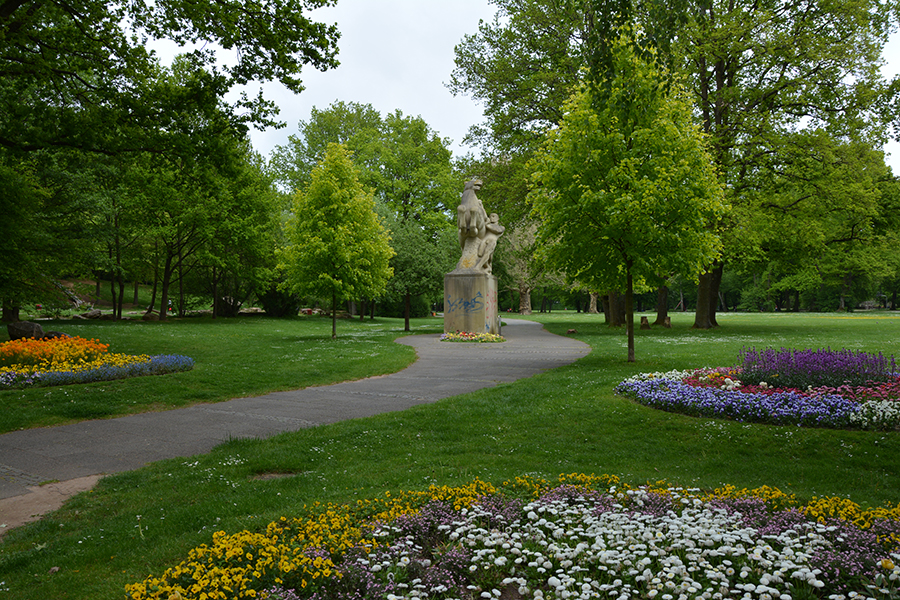
The Volkspark, formerly known as „Die Ausstellung“ (The Exhibition), is located in the east of Kaiserslautern. The area of the present-day park was used as an exhibition ground from 1925 onwards. Here, the people of Kaiserslautern could view art and crafts and relax from the stresses of their daily lives. During the Second World War (1939-1945), the buildings on the grounds were destroyed and not rebuilt. Today, parts of the former exhibition grounds serve as a local recreation area.
Read more about the Volkspark in Kaiserslautern
Gardens & parks – 5 –
Stadtpark in Kaiserslautern
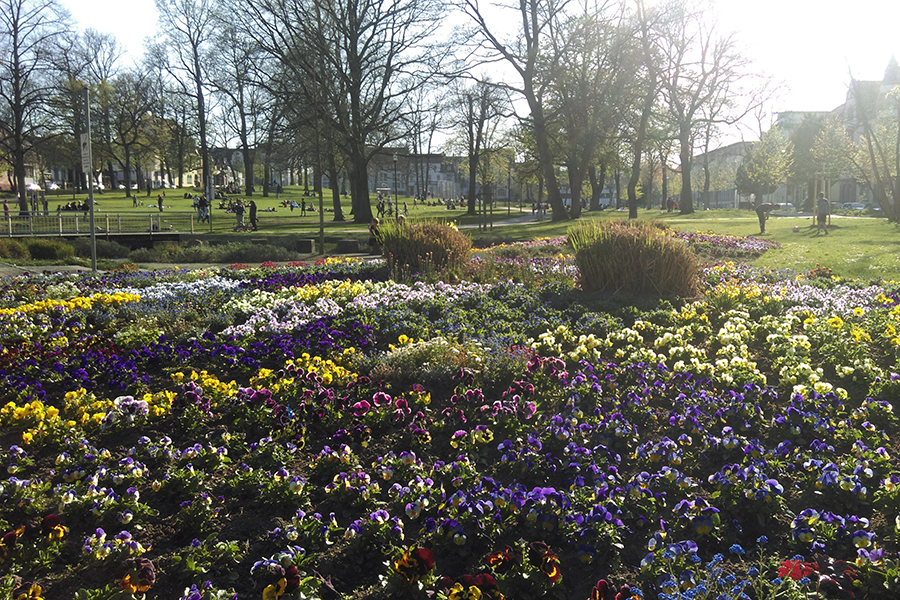
The Stadtpark (city park) in Kaiserslautern was first laid out in 1876, making it the oldest park in the city. Maintenance was disrupted during World War II, and the park subsequently underwent significant redesign in the 1970s. In March 2002, a complete redesign of the park was approved, with work beginning in 2005 and being completed in 2013. Due to its proximity to the city center, the city park is now one of the most popular green spaces in Kaiserslautern.
Read more about the Stadtpark in Kaiserslautern
Address: Stadtpark, 67655 Kaiserslautern
Old Cemetery in Pirmasens
The Old Cemetery is a six-hectare disused cemetery in Pirmasens, dating back to 1763, which was transformed into a park in 1973. Within the Old Cemetery’s protected historical zone, several significant graves and monuments, as well as parts of the Jewish section, are still preserved. The cemetery also features mature trees and the former consecration hall, now an event venue known as the Carolinensaal. A modern sculpture park, established in 1998, provides a contrast to the old gravestones.
Gardens & parks – 6 –
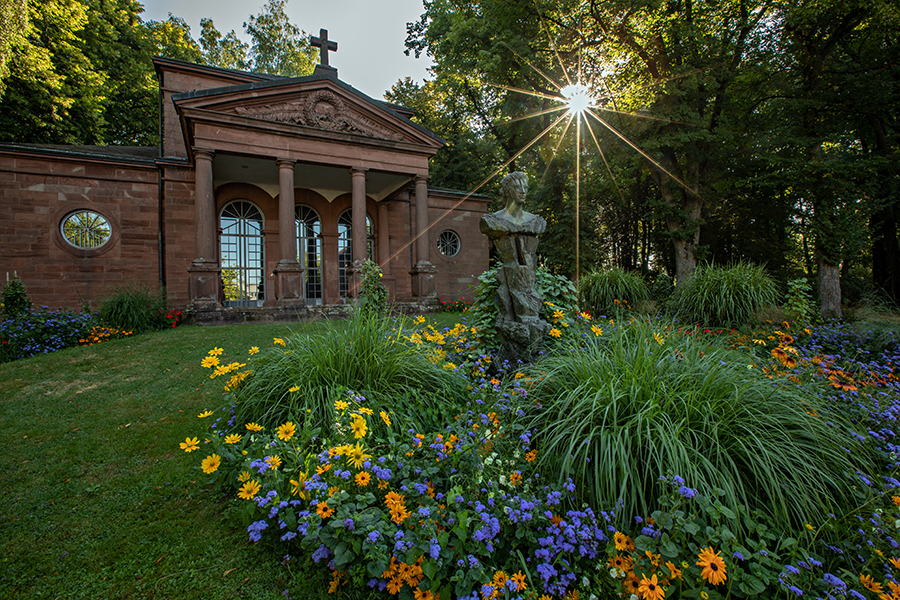
Read more about the Old Cemetery in Pirmasens
Address: Friedhofstraße, 66955 Pirmasens
Castle gardens in Trippstadt
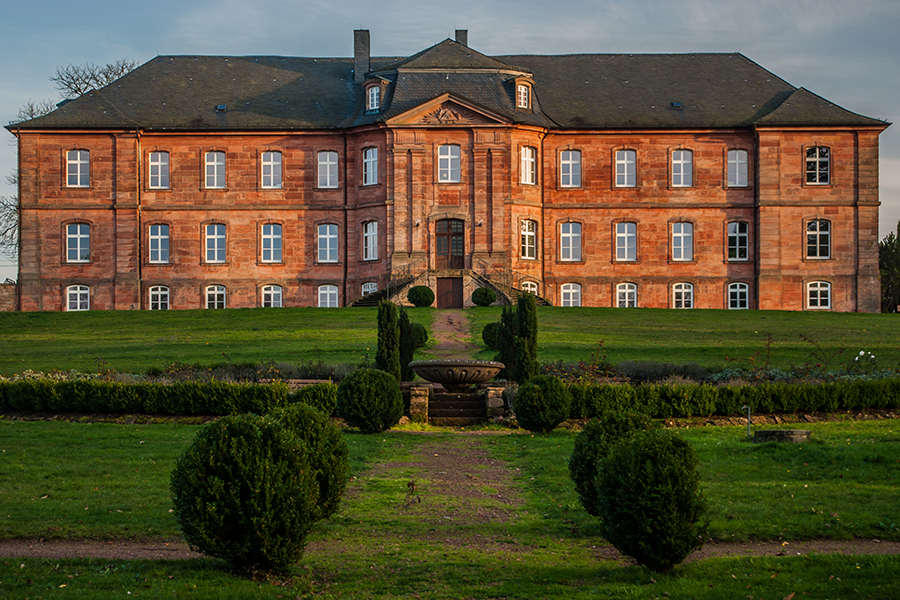
The famous Baroque palace in Trippstadt is bordered directly by the palace gardens, which today cover approximately three hectares. Originally, the gardens were laid out in the French style, modeled after Versailles, when the palace was built in 1767. Later, they were redesigned as English landscape gardens and were larger than they are today, extending as far as the Karlstal valley. After the garden’s destruction and neglect following numerous wars and changes of ownership, it was redesigned at the end of
Gardens & parks – 7 –
the 19th century. At the beginning of the 21st century, a complete redesign of the park, including its reconnection to the adjacent Karlstal valley, was planned according to a design by Johannes Rolfes.
Read more about the castle gardens in Trippstadt
Address: Am Schlossgarten 8, 67705 Trippstadt
Hornbach Monastery in the Bliesgau
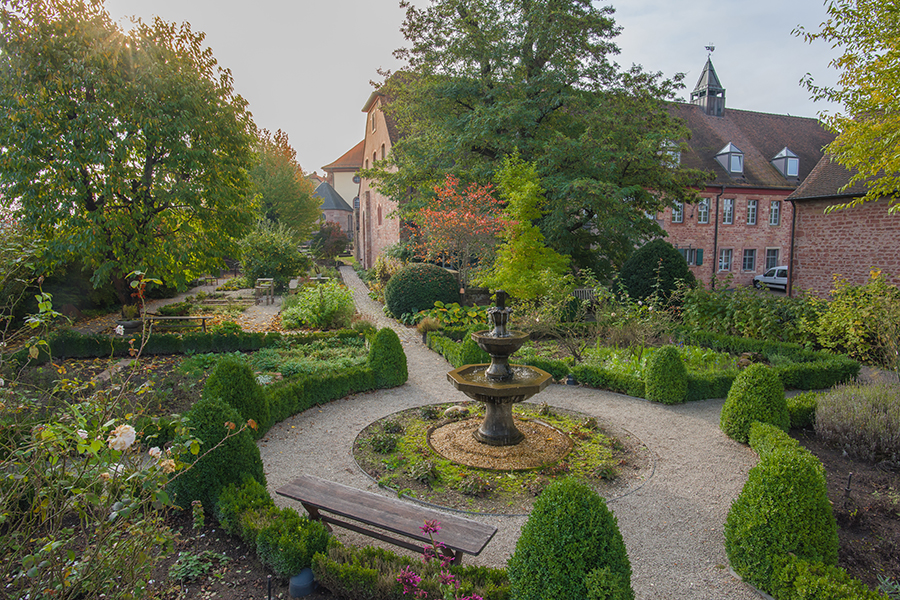
The Hornbach Monastery is located in the heart of the small town of the same name in the Südwestpfalz district, near the French border. It was once one of the wealthiest and most important monasteries in southwestern Germany. The remains of the complex are in good structural condition. Today, the monastery buildings house a hotel with a restaurant, a museum, and the new Fabianstift.
Read more about the Hornbach Monastery
Address: Im Klosterbezirk 1, 66500 Hornbach
Gardens & parks – 8 –
Celtic garden in Steinbach am Donnersberg
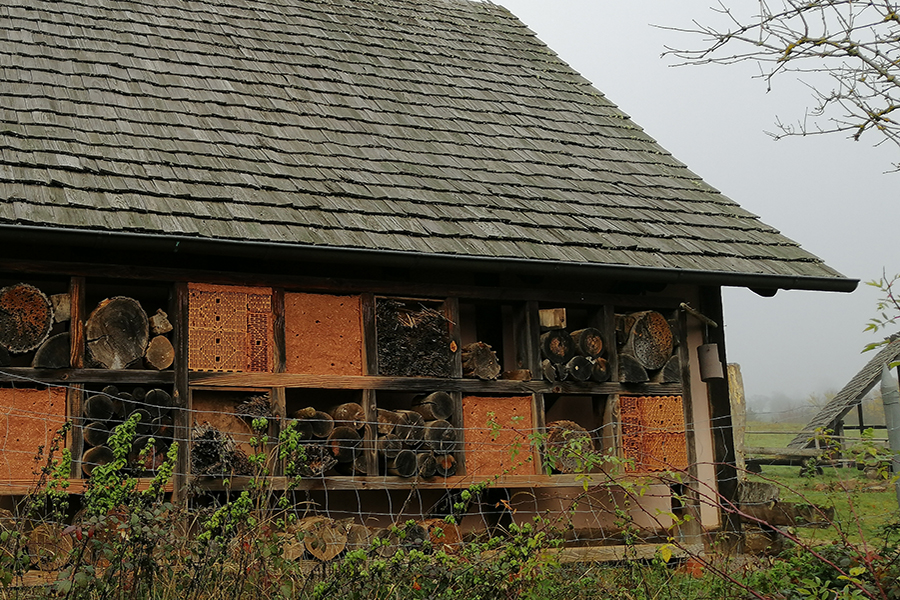
The Celts shaped the region around the Donnersberg mountain, and therefore the town of Steinbach at the foot of the Donnersberg offers two attractions that vividly bring the Celtic world to life for visitors: a Celtic village and a Celtic garden. The garden covers approximately 6.4 hectares and is designed to encourage exploration with all the senses. The three themed areas – „Nature Then and Now,“ „Culture and Belief,“ and „Life and Work of the Celts“ – illustrate the flora and agriculture of Celtic times. A sculpture trail, just over 8 kilometers long, has also been created near the Celtic garden, showcasing a total of 13 different Celtic sculptures.
Read more about the Celtic Garden

You can find more beautiful gardens and parks in the region at the Westpfalz Wiki
Gardens & parks – 9 –